Pigment-Based Longevity
The definitive standard for contemporary art reproduction. Understanding the mechanics of modern aqueous pigment inkjet technology.
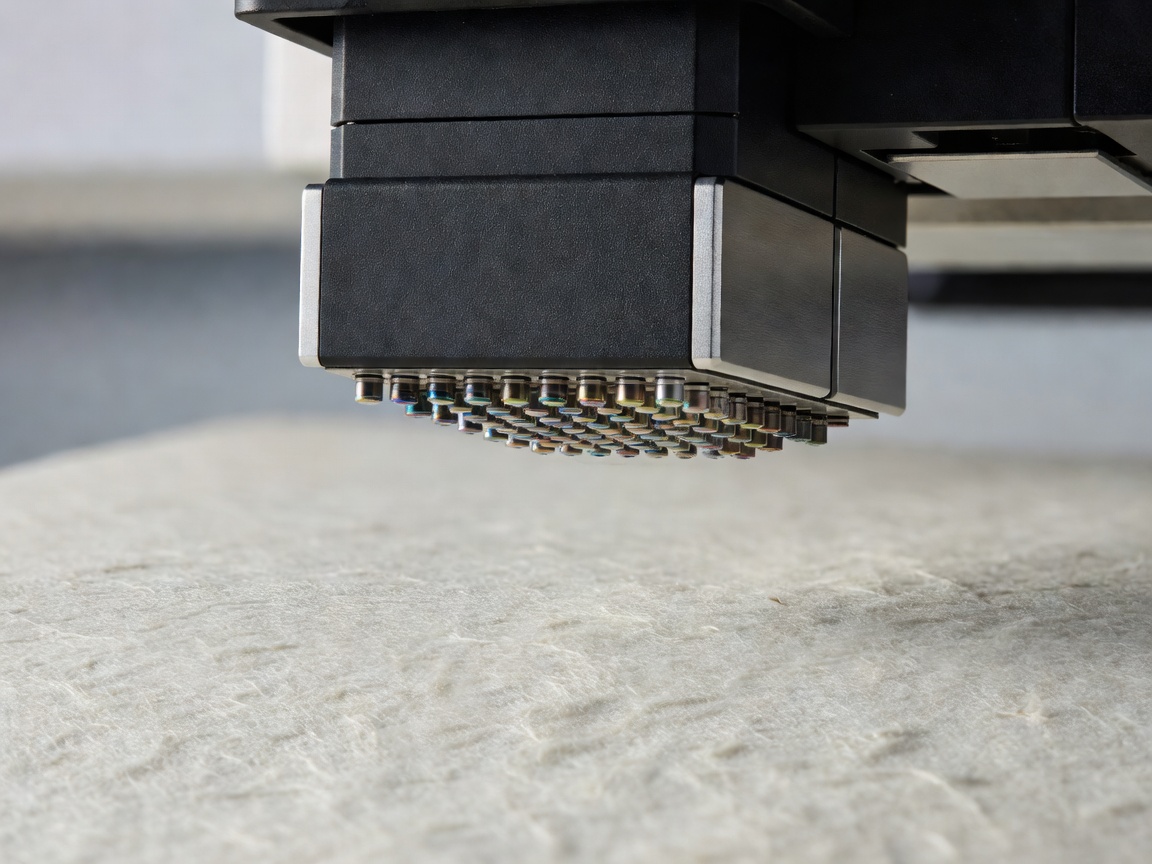
The Architecture of the Droplet
Often referred to commercially as Giclée, high-end inkjet printing relies on piezoelectric printheads capable of firing microscopic droplets of ink (often as small as 3.5 picoliters). Unlike dye-based inks, which dissolve entirely into a solution and are highly susceptible to UV degradation, modern archival systems utilize encapsulated pigment particles suspended in a resin.
These pigment particles sit within the coating of the fine art paper rather than soaking through the fibers. This structural difference accounts for the dramatic increase in longevity—often tested by the Wilhelm Imaging Research institute to last between 100 and 200 years under standard gallery lighting.
12-Ink Color Gamuts
Early inkjet systems struggled with smooth tonal transitions, particularly in monochrome. Today’s gallery-standard machines (such as the Epson SureColor P-Series or Canon imagePROGRAF lines) employ up to 12 distinct ink channels.
- Multi-Level Blacks: Photo Black, Matte Black, Light Black, and Light Light Black ensure perfectly neutral gradients without color casting.
- Gamut Expanders: Violet, Orange, and Green inks push the reproducible color gamut to encompass up to 99% of the Pantone Solid Coated palette.
- Gloss Optimizers: Clear resins applied over pigmented areas to eliminate gloss differential on resin-coated (RC) or baryta papers.
Software & Color Management
Hardware is merely the conduit; the translation of a digital file requires meticulous profiling. Custom ICC profiles are generated using spectrophotometers for every specific combination of printer, ink batch, and paper stock. This closed-loop color management ensures that a deeply shadowed gallery photograph retains detail in the 5% luminance range without blocking up into pure black.